A good Kuala Lumpur 3-day itinerary gives one day to the skyline and the old city, one to Batu Caves and the city's food streets, and one to whatever interests you most. That is enough for a first-time visitor to see the Petronas Twin Towers, Merdeka Square, Chinatown and Batu Caves without rushing.
The plan below groups sights by neighbourhood, so you cross the city once a day rather than four times. Opening hours and ticket prices were checked against official sources in October 2026, but they change, so check before visiting.
Route: Day 1: KLCC and old KL → Day 2: Batu Caves and Bukit Bintang → Day 3: your choice
Quick answer: the best 3-day plan for Kuala Lumpur
Spend day one at the Petronas Twin Towers and KLCC Park, then Merdeka Square, Central Market and Chinatown. Start day two early at Batu Caves, add a temple or museum, and finish with dinner around Jalan Alor. Use day three for Putrajaya, museums, food or a day trip. Stay in KLCC or Bukit Bintang.
| Day | Area | Highlights | Getting around |
|---|---|---|---|
| 1 | KLCC and the historic centre | Petronas Twin Towers, KLCC Park, Merdeka Square, Central Market, Chinatown | Walk, plus one short LRT or e-hailing ride |
| 2 | North of the city, then Bukit Bintang | Batu Caves, Thean Hou Temple or Islamic Arts Museum, Jalan Alor | KTM Komuter or a car to Batu Caves |
| 3 | Your choice | Putrajaya, museums, food neighbourhoods, shopping or a day trip | Depends on the option |
Is 3 days enough for Kuala Lumpur?
Yes, for a first visit. A Kuala Lumpur 3-day itinerary covers the landmarks most people come for, with time left for food and one experience chosen around your interests.
What three days will not do is cover the city and several day trips. Kuala Lumpur's sights are spread out: KLCC, Chinatown, Batu Caves and Putrajaya each need their own block of travel time, and traffic can double a journey at rush hour. If Genting Highlands, Malacca and Putrajaya are all on your list, stay four or five days. For a fuller overview of what the city offers, see our guide to attractions in Kuala Lumpur.
Before you go: what to book and pack
Book the Petronas Twin Towers in advance
Visits to the Skybridge and observation deck run on timed slots, and tickets for the next 24 hours can only be bought online. When we checked the official ticketing page in October 2026, the towers opened Tuesday to Sunday and on selected Mondays only, with non-MyKad tickets listed at RM98 for adults and RM50 for children aged 3 to 12. Arrive at the entry point 15 minutes before your slot. Book on the official Petronas Twin Towers ticketing site, and check the calendar for closures before you build day one around it.
Dress for religious sites
Batu Caves, Thean Hou Temple, the National Mosque and Putra Mosque are places of worship. Cover shoulders and knees, and carry a light scarf or sarong. Some mosques lend robes, but arriving dressed for it saves time.
Plan for heat and rain
Kuala Lumpur is hot and humid all year, and heavy afternoon showers are common. Do outdoor walks in the morning or late afternoon, keep indoor stops for the middle of the day, and carry water, sunscreen and a compact umbrella.
Submit your arrival card
Most foreign visitors must complete the Malaysia Digital Arrival Card (MDAC) within three days before arriving, on the Immigration Department's official MDAC portal. Singapore citizens are among the exempt groups. Visa rules depend on your nationality, so check them before booking flights.
Arriving from KLIA
The KLIA Ekspres train reaches KL Sentral in about 28 minutes; the operator listed an adult single fare of RM55 in October 2026. It is the quickest option if your hotel is near KL Sentral. For three or more people, or a hotel elsewhere, a pre-booked car is often simpler. Embassy Alliance arranges private airport transfers in Kuala Lumpur with meet-and-greet and flight tracking.
Day 1: KLCC, Merdeka Square and Chinatown
Day one shows you both faces of the city: the glass-and-steel skyline in the morning and the colonial and Chinese quarters in the afternoon.
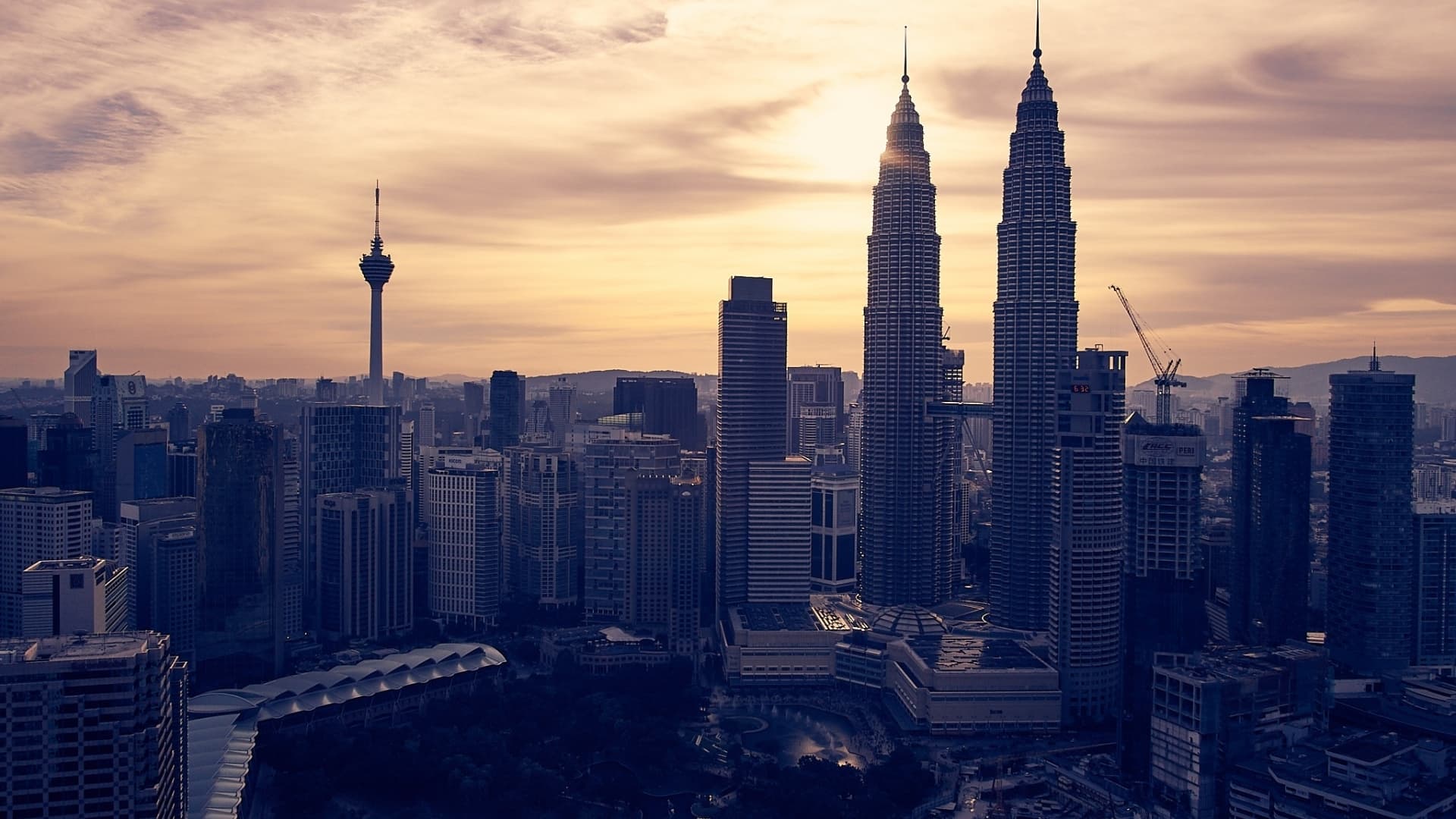
Morning: Petronas Twin Towers and KLCC Park
Take the earliest tower slot you can get. A visit takes around an hour and gives you the view across the city that makes the rest of the trip easier to picture. If you would rather not pay, the towers look just as striking from KLCC Park below, which is free and at its best before the heat builds.
Allow 30 to 60 minutes for a loop of the park. Suria KLCC, the mall at the base of the towers, is the easiest place for coffee or an early lunch before moving on.
 01
Afternoon: Merdeka Square and the heritage core
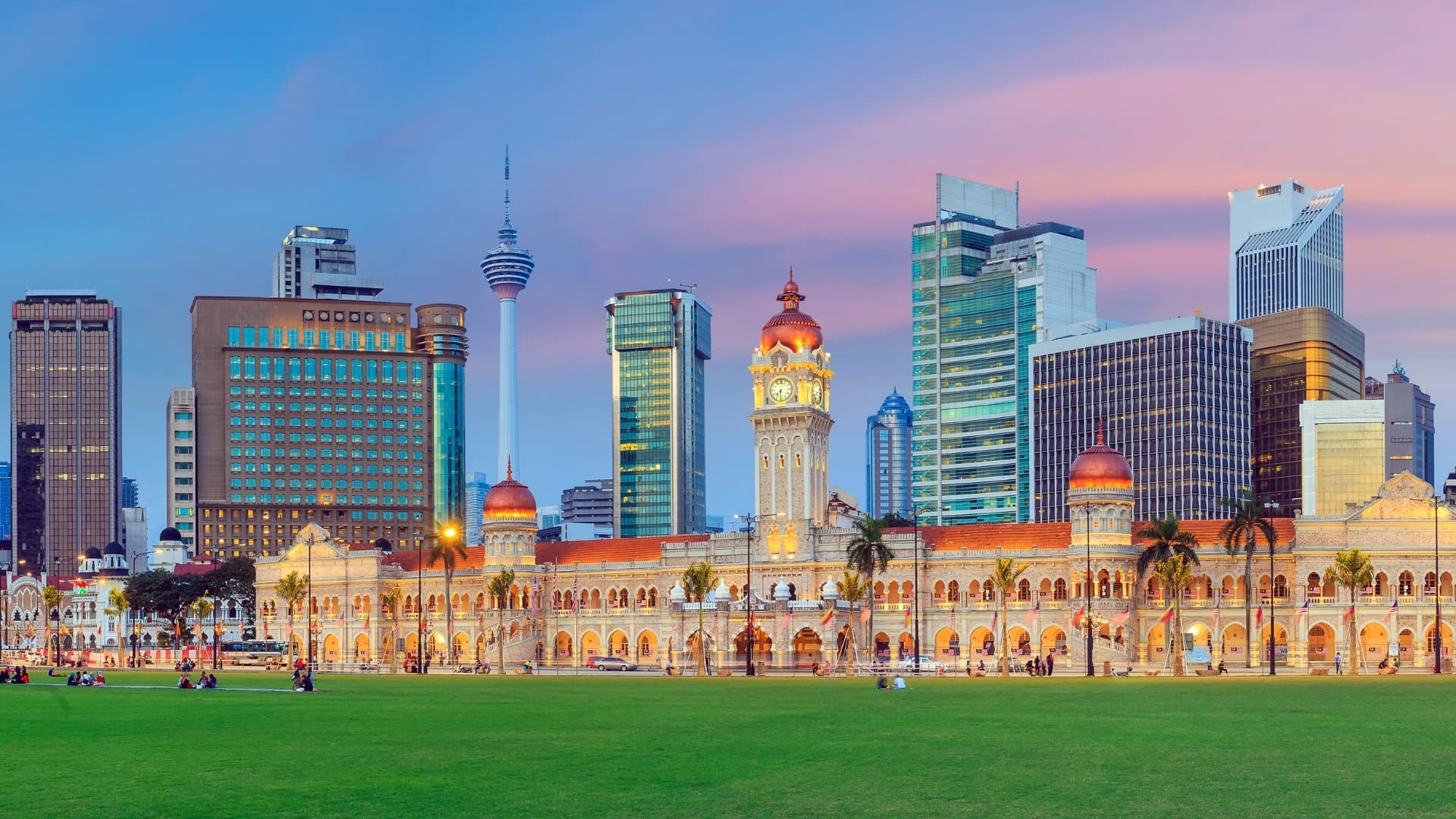
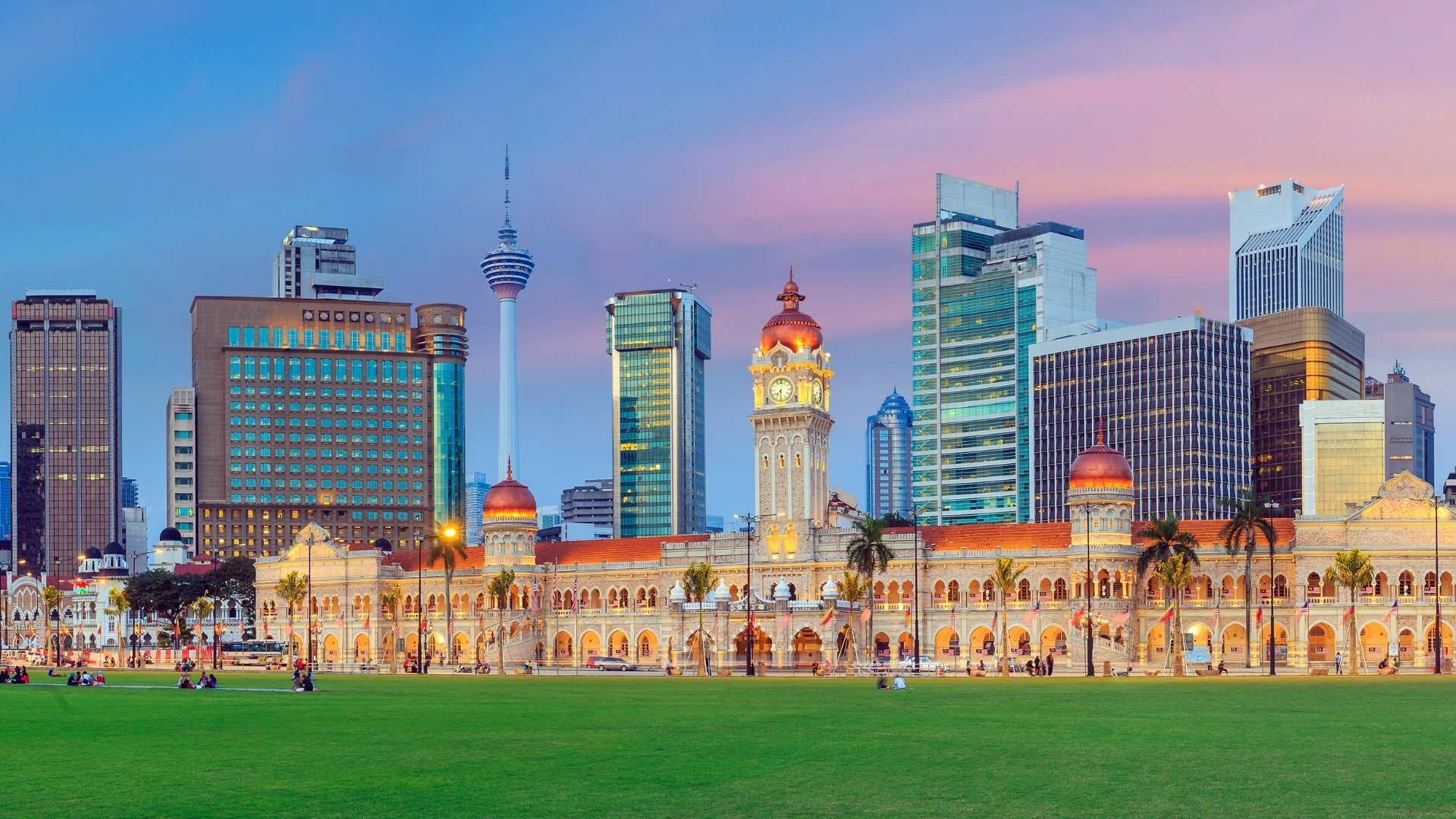
Take the LRT or a short e-hailing ride to Merdeka Square, where the Malayan flag was raised for the first time at midnight on 31 August 1957. Facing it is the Sultan Abdul Samad Building, inaugurated in 1897 and still the city's most photographed colonial landmark. Walk on to Masjid Jamek at the meeting of the Klang and Gombak rivers, the spot that gave Kuala Lumpur its name.
Finish the afternoon at Central Market, built in 1888 as a wet market and now home to Malaysian crafts, batik and souvenirs. It is air-conditioned, which makes it a welcome stop on a hot day. Compare a few stalls before buying textiles or artwork.
 02
Evening: Chinatown and Petaling Street
Chinatown is a short walk from Central Market. Petaling Street is the famous market lane, but the real interest is around it: old shophouses, coffee shops, the murals of Kwai Chai Hong and temples within a few streets of each other. Eat at a local restaurant or food stall, then head back to the hotel or on to Bukit Bintang if you still have energy.
Day 2: Batu Caves, temples and Bukit Bintang
Day two of this Kuala Lumpur 3-day itinerary heads north to Batu Caves, comes back for a quieter temple or museum, and ends in the city's busiest food street.
 01
Morning: Batu Caves
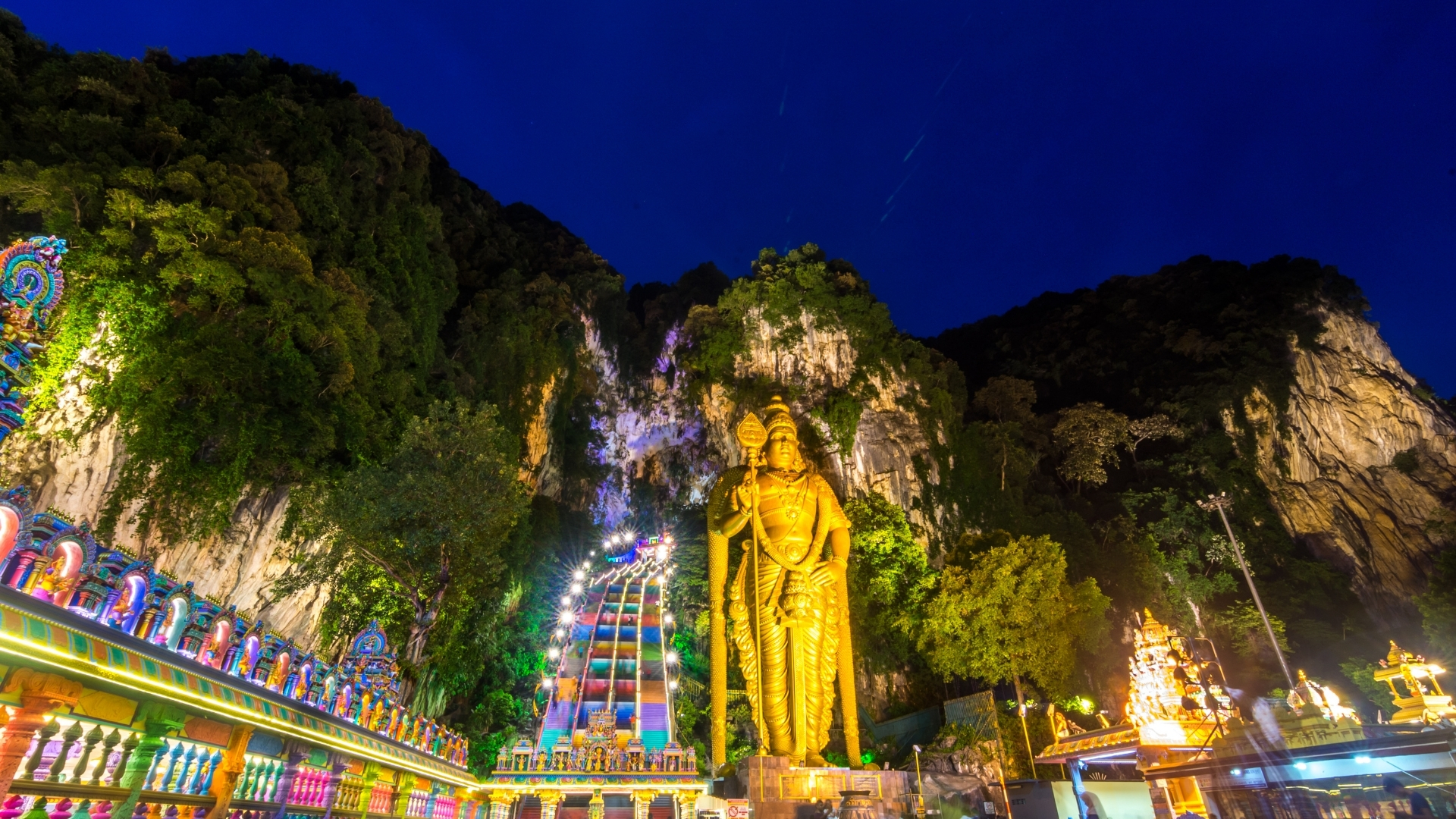
Go early. Batu Caves is a working Hindu temple complex in a limestone hill north of the city, and the main Temple Cave sits at the top of 272 brightly painted steps beside a giant golden statue of Lord Murugan. By late morning the steps are hot and crowded.
The KTM Komuter train runs to Batu Caves station, a short walk from the entrance, or you can take a car or e-hailing ride. Allow two to three hours including travel.
- Cover shoulders and knees; sarongs are usually available at the base.
- Keep food and drinks out of sight. The resident macaques snatch them from hands and open bags.
- If you would rather not climb, the temples and statue at ground level are still worth seeing.
- Avoid Thaipusam (22 January 2027) unless you specifically want the festival; it draws enormous crowds.
Our Kuala Lumpur and Batu Caves excursion combines the caves with the city's main landmarks and a pewter factory visit, with a guide and hotel pickup.
Afternoon: Thean Hou Temple or a museum
Back in the city, choose one. Thean Hou Temple is a multi-tiered Chinese temple dedicated to the sea goddess Mazu, set on a hill south of the centre with red lanterns and views over the city. Allow about an hour, keep voices low and follow the photography signs.
If you prefer air-conditioning and context, the Islamic Arts Museum Malaysia near the Lake Gardens covers textiles, manuscripts, ceramics and architecture from across the Islamic world, and the National Mosque is a short walk away. Check mosque visiting times for non-Muslim visitors on the day, as they close for prayers.
Evening: Bukit Bintang and Jalan Alor
Bukit Bintang is Kuala Lumpur's main shopping and nightlife district, and Jalan Alor, one street back, is its best-known food street. Walk the length of it before choosing where to eat, and ask the price before ordering seafood or anything sold by weight. For more choice, our pick of restaurants and bars in Kuala Lumpur covers rooftop bars and local favourites, or you can join a guided evening street food tour.
Day 3: Choose your own day three
Do not repeat days one and two. Pick the option that matches what you enjoyed most, and leave the evening free.
Putrajaya
Malaysia's planned administrative capital, south of the city, is known for the pink-domed Putra Mosque beside its lake, grand boulevards and striking bridges. A half day is enough. Our Putrajaya tour covers the mosque, Putra Square and the bridges with a guide.
Museums and gardens
Pair the National Museum with the Islamic Arts Museum, or with a walk in the Perdana Botanical Gardens. A good choice on a rainy day.
Food neighbourhoods
Try Malay food in Kampung Baru, Indian food in Brickfields and a hawker lunch in between. Go hungry and travel by e-hailing between areas.
Shopping
Pick two areas rather than six malls: Bukit Bintang and KLCC for brands, Central Market for crafts. Our guide to shopping in Kuala Lumpur lists the main malls and markets.
A day trip
Genting Highlands or Malacca each take a full day and replace everything else. Choose one only, and leave early.
 01
A slow day
Late breakfast, a spa, the hotel pool and one last landmark. After two full days, this is often the best choice.
Where to stay for 3 days in Kuala Lumpur
On a Kuala Lumpur 3-day itinerary, location matters more than the room rate. A cheaper hotel far from the centre costs you time and fares every day.
| Area | Best for | Trade-off |
|---|---|---|
| KLCC | Tower views, parks, polished hotels, easy day one | Higher prices for rooms and dining |
| Bukit Bintang | Food, nightlife, shopping on the doorstep | Busy and noisy late at night |
| KL Sentral | Airport train, KTM Komuter to Batu Caves, early departures | Convenient rather than atmospheric |
| Chinatown | Heritage streets, value hotels, local food | Room quality varies; read recent reviews |
KLCC and Bukit Bintang are linked by a covered, air-conditioned elevated walkway, so either base works for days one and two. Browse our selection of hotels in Kuala Lumpur by area and budget.
Getting around Kuala Lumpur
Each district is walkable, but the itinerary as a whole is not. Mix rail with e-hailing and keep a car for the days with the longest distances.
| Trip | Easiest option | Notes |
|---|---|---|
| Within KLCC and to Bukit Bintang | Walk | Use the covered walkway in the heat or rain |
| KLCC to Merdeka Square | LRT or e-hailing | About 15 minutes outside rush hour |
| City to Batu Caves | KTM Komuter from KL Sentral, or a car | Leave early to beat heat and traffic |
| City to Putrajaya | Car or guided tour | Sights are spread out once you arrive |
If you plan to use trains and buses a lot, Rapid KL's Rapid Kembara tourist pass offers unlimited rides on participating Rapid KL rail and bus services; prices from January 2026 were RM25 for one day and RM55 for three days, plus the Touch 'n Go card. E-hailing apps such as Grab are widely used and handy for families, evenings and rainy afternoons. A private car and guide makes most sense for Batu Caves and Putrajaya, where the value is in not having to plan each leg.
How to adapt the plan
Couples
Add a rooftop bar on day one, a spa on day three and Putrajaya at sunset. Skip long shopping blocks unless you both enjoy them.
Senior travellers
Use a car between areas and see Batu Caves from ground level if the stairs are a concern. Book tower slots for the morning, when queues and heat are lower.
Food lovers
Make day three a food day and add a guided street food walk on day two. Breakfast on roti canai or nasi lemak rather than at the hotel.
Families with children
Swap heritage walks for Aquaria KLCC and Petrosains, slow the pace and plan a midday rest. A family-specific plan works better than squeezing children into this one.
Common first-timer mistakes
- Climbing Batu Caves at midday. The heat and crowds make the 272 steps far harder than at 8am.
- Booking the towers last minute. Popular slots sell out, and the towers close on some Mondays.
- Zigzagging across the city. Keep KLCC, the heritage core and Batu Caves in separate blocks.
- Underestimating traffic. A 20-minute drive can take an hour at rush hour or in a downpour.
- Treating day three as another checklist. Choose one theme and enjoy it properly.
Related Malaysia Travel Guides
- Kuala Lumpur Airport Transfer Guide: KLIA to the City
- Malaysia Digital Arrival Card: Step-by-Step MDAC Guide
- Kuala Lumpur Family Itinerary: 3 Days with Kids
- Kuala Lumpur to Genting Highlands Transport Guide
- Kuala Lumpur to Cameron Highlands Day Trip Guide
- Singapore Malaysia Itinerary: 7, 10 and 14 Days
- Malaysia Travel Cost Guide: Daily Budget, Tours and Fees
Frequently Asked Questions
Yes. You only need a ticket to go up to the Skybridge and observation deck. The towers can be seen free from KLCC Park, the forecourt and the lakeside in front of Suria KLCC, and they are lit up after dark. Many first-time visitors photograph them by day and come back in the evening for the illuminated view.
Partly. KLCC, Bukit Bintang, Chinatown and the area around Merdeka Square are each easy to explore on foot, and a covered walkway links KLCC with Bukit Bintang. Between districts, pavements can be broken, crossings busy and the heat tiring, so most visitors use the LRT, MRT, monorail or e-hailing for the longer hops.
Yes. Grab is widely used in Kuala Lumpur and works for rides from the airport, between districts and to Batu Caves. Fares are shown before you book, which avoids haggling. Expect higher prices and longer waits during rush hour and heavy rain, and check the number plate before getting in.
Yes, if you have enough time to clear immigration, travel into the city and return for check-in. The KLIA Ekspres takes about 28 minutes to KL Sentral, so a long layover allows a short city loop. For a stopover of two or three nights, Embassy Alliance offers a Kuala Lumpur stopover package with hotel, transfers and a city tour.
Kuala Lumpur is generally a comfortable city for visitors, but take normal big-city care. Keep bags on the side away from the road, watch for pickpockets in crowded markets and on trains, and use e-hailing apps or registered taxis rather than unofficial drivers. Keep valuables in the hotel safe and carry a copy of your passport.
Only if it is a priority. Genting Highlands takes a full day once you include the drive, the cable car and time at the top, so it replaces your whole third day. It suits travellers who want cooler air, theme parks or the casino. If you want culture and food, Putrajaya or a museum day is a better use of limited time.
Light, breathable clothes and comfortable walking shoes for the heat, plus a light layer for strongly air-conditioned malls and trains. Pack one outfit that covers shoulders and knees for temples and mosques, or carry a scarf or sarong. A compact umbrella is useful year-round for sun and sudden showers.
Plan your Kuala Lumpur 3-day itinerary with local help
The best Kuala Lumpur 3-day itinerary balances big landmarks with time to eat, rest and wander. Use day one for KLCC and the old city, day two for Batu Caves and Bukit Bintang, and day three for the experience that suits you best.
Embassy Alliance has been a licensed destination management company in Malaysia since 2005. Our team can arrange your hotel, airport transfer and private guided excursions with licensed English-speaking guides, so you spend your three days seeing the city rather than planning it.